

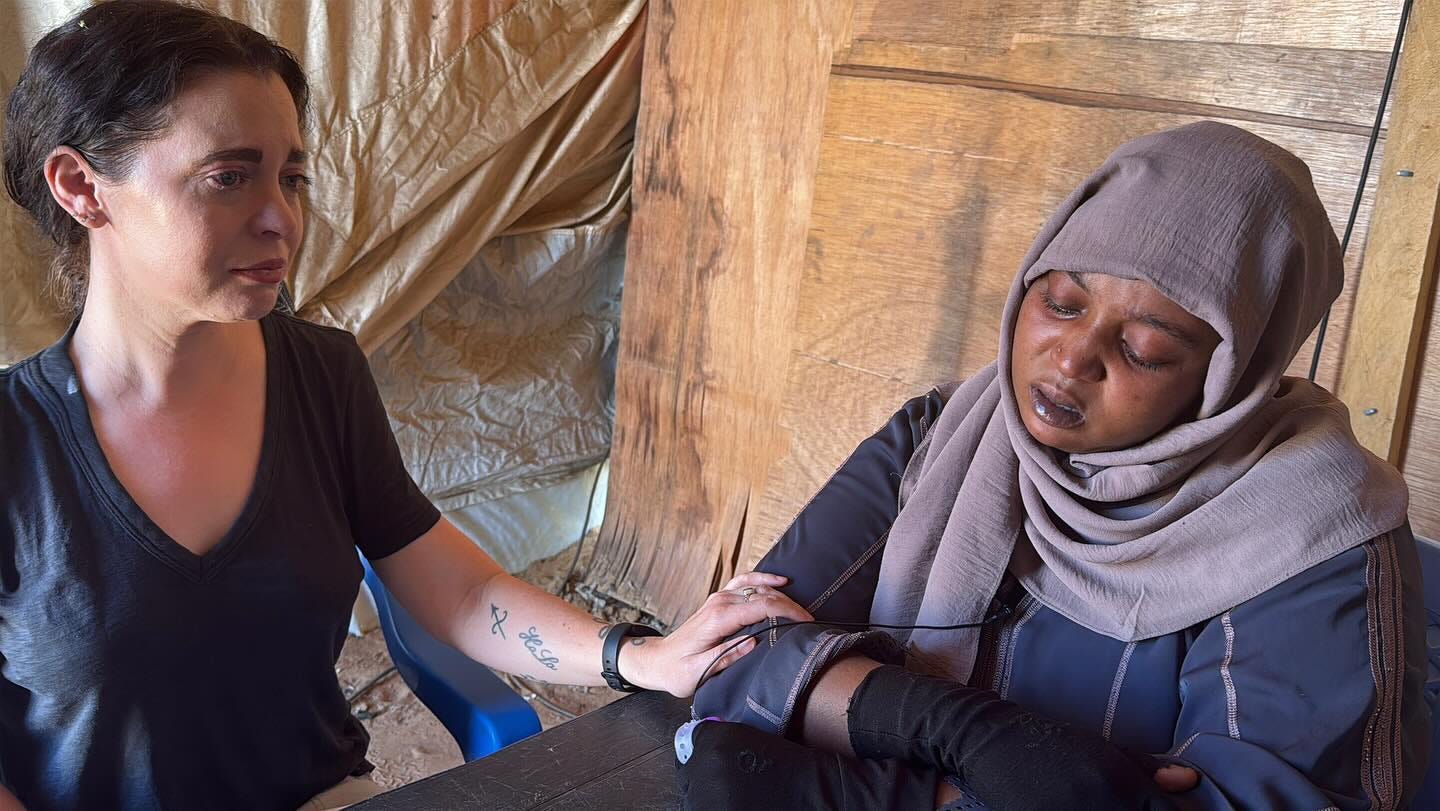
In Sudan’s Darfur region, the scale of human suffering defies comprehension. Entire towns have been reduced to ash. Women and girls live in constant terror of abduction and assault. Starving families crowd beneath tattered plastic sheeting, clinging to life in a wasteland of dust and despair. I met mothers who had buried children so malnourished their bodies gave out quietly, without even the strength to cry. These are the fragments of a catastrophe that should haunt the conscience of the world. Yet beyond the borders of Sudan, almost no one seems to notice — or care.
The war that erupted in April 2023 between the Sudanese Armed Forces and the Rapid Support Forces has plunged Darfur back into the nightmare it endured two decades ago. It is, by every measure, one of the world’s worst humanitarian crises. The United Nations estimates that tens of thousands have been killed, millions displaced, and entire cities cut off from food, medicine, and aid. In some areas, no supplies have entered for months. Hunger is being weaponized as a tool of war, and civilians —especially children — are paying the price. Satellite images show scorched villages and mass graves. Field hospitals operate without anesthesia. Rape is being used systematically as punishment and control.
The situation has reached such depths that UN officials have called Darfur “the epicenter of the world’s worst humanitarian crisis.” And yet, when global leaders gathered for the recent United Nations General Assembly in New York, the siege and starvation unfolding there barely earned a passing mention. In the echo chamber of international diplomacy, Darfur has become an afterthought.
This silence is not accidental. Part of it is fatigue; an exhaustion born of too many crises and too few solutions. The world is watching Gaza, Ukraine, Haiti, and Myanmar. Sudan, once the focus of global outrage, now feels like yesterday’s tragedy. Newsrooms, hollowed out and overstretched, have few correspondents on the ground. The fighting has made the region almost impossible to access; reporters and aid convoys alike have been shot at or turned back. When atrocities go unseen, they are too easily forgotten.
Part of the indifference is geopolitical. Darfur holds little strategic value for the great powers. It sits outside the trade routes and energy corridors that drive modern diplomacy. The war’s complexities—tribal, ethnic, religious, and political — do not lend themselves to easy moral narratives. Western governments hesitate to pick sides; regional actors are more interested in their own spheres of influence than in human rights. So the crisis festers in a vacuum of leadership, and the perpetrators of mass murder operate with impunity.
There is also a moral numbness at play. After years of witnessing conflicts that seem endless, many have stopped believing their outrage can matter. Donors have cut funding. Aid agencies have closed offices. The world has learned to scroll past starvation, to rationalize that suffering in faraway places is somehow inevitable. But it is not inevitable. It is the direct result of decisions made — and not made — by people in power.
Darfur’s tragedy did not begin yesterday. In 2003, rebel groups rose against the regime in Khartoum, accusing it of discrimination and neglect. The government responded with a campaign of extermination, deploying Arab militias known as the Janjaweed. The International Criminal Court charged Sudan’s then-president, Omar al-Bashir, with genocide and crimes against humanity. The world said “never again.” But the Janjaweed never truly went away. They evolved into the Rapid Support Forces, a paramilitary empire enriched by gold smuggling and mercenary contracts, now accused of committing many of the same atrocities against the same ethnic groups. History, in Darfur, is repeating itself — only this time, the world is looking the other way.
I have met survivors who wonder aloud if their lives matter less because they are African. After all, they are poor because their war is inconvenient. They ask me why no one speaks for them at the UN, why no global coalition demands a ceasefire, and why their children’s hunger does not make headlines. I struggle to find an answer that feels honest.
If the world truly wants to reclaim its moral compass, that indifference must end. Political leaders must do more than issue statements—they must use their leverage to force open humanitarian corridors, to sanction those orchestrating the siege and starvation, to make Sudan impossible to ignore. Journalists must keep telling the stories, even when the audience turns away.
Caring is not an act of charity—it is an act of responsibility. The suffering in Darfur is not happening in the shadows by accident; it is happening there because the light of attention has been deliberately withdrawn. If there is to be any hope of ending this cycle, that light must return.
Darfur’s people are not asking for pity. They are asking to be seen. And until the world sees them, truly sees them, our silence will remain the loudest weapon of all.
THANK YOU FOR YOUR SUPPORT. PLEASE CONSIDER A PAID SUBSCRIPTION TO HELP KEEP INDEPENDENT JOURNALISM ALIVE.
I feel utterly helpless and ashamed. I pray for Sudan, just as I pray for Gaza, Ukraine, Myanmar, and others. The horrific cruelty humans so easily resort to leaves me feeling stunned and hopeless. I think many other deeply caring souls feel the same. It breaks my heart every day.