

Nestled in the Catskill Mountains, I hold Rumi to my bare chest and curl my toddler’s sun-kissed hair into ringlets with my spare hand, clutching this present moment, silently begging time to halt even as it insists on moving forward. Summer is starting to fade, along with the precious newborn scent, the days growing darker as the breeze ushers in all that is unmoored, the babyhood I am already losing, the woman I was before I begged for this.
A year ago, Ryan and I took Raven to Marrakech, Morocco, to visit friends, to ride camels at dusk and marvel at spices in the souk. I felt, for the first time in months, the serrated edges of my earlier summer miscarriage grief begin to unravel. In the ancient city’s oldest madrassa, with sunlight pouring through carved archways, the severing came.
My body collapsed into sobs I could not contain and hadn’t even sensed were waiting. The surrender was sudden and undeniable. I started, very slowly, to sift through the weeds for the faith that glues the world together when the fault lines emerge.
You can read more about that trip here.
There, wrapped in the Sufi spirit and the warmth of the sun, something in me stilled. I didn’t pray for another child, though I wanted one so desperately. I prayed gratitude instead, for what I already had. It was the reminder I needed: to accept and embrace every blessing already given before asking God for more.
I had enough. But the best was yet to come.
If only I had known then that in less than a year I would be cradling my second child in the crook of my arm. Yet the point, I think, was not to know. It was to surrender to the present wholeheartedly. And that, above all, is what I am trying to take with me now as the days grow steadily shorter and my baby grows from that curled creature of the womb into an open-eyed infant, alert and sensing her place in this world.
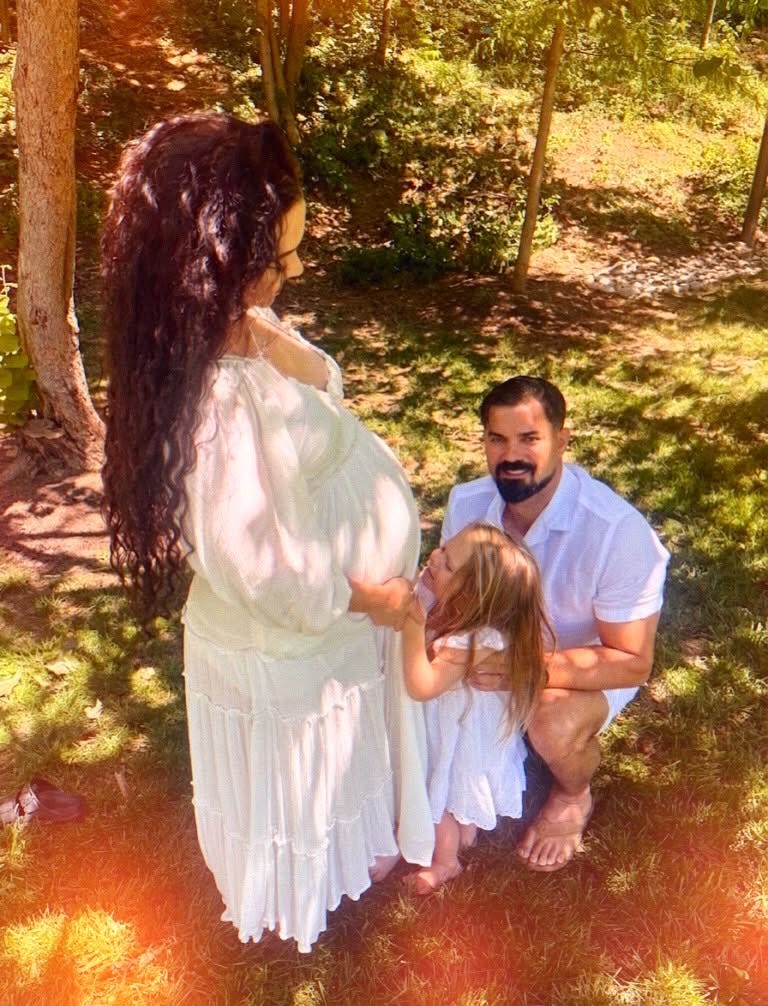
I emerged from my postpartum cocoon a little more this past week, having reached the six-week, or forty-day, milestone where you visit the doctor in hopes of “clearance” to do many things I had missed — from taking bubble baths to morning runs to wading in the pool at sunset.
I left my appointment both relieved and broken-hearted. Relieved knowing that I did it, that it is done, and simultaneously saddened that the birthing chapter of my life has come to its beautiful end. We feel very complete with our two darling girls, and I understand that my role now is to nurture and guide them.
However, there is still a kind of grief in accepting that, for all the anxiety I weathered ahead of every appointment, test, and ultrasound, I will never again experience the same routine care and attentiveness from my doctor and midwife, or the excitement of pushing an incredible creation earthside. I realize I am one of the fortunate ones, that not every woman has the positive experience I have had both times, where I feel seen and listened to.
I am also one of the perhaps select few who relished (almost) every moment of the pregnancy journey and carried through the surrender I found in Marrakech. Carrying a child is absolute surrender and growth in its purest form.
I found myself returning repeatedly throughout those nine months to Thomas Dorsey’s “Precious Lord, Take My Hand,” a gospel that came from his own devastation, written after he lost his wife and newborn son in the same terrible week.
Yet something in those rich words reached past the apprehension of a past loss and graced the part of me that already knew: there was nothing left to control. The outcome was not mine to determine. All I can do is walk the path. And to walk it, I had to let go of the grip entirely, the white-knuckled need to manage, monitor and protect against the unprotectable.
“Precious Lord, Take My Hand” pulled me toward the notion that I did not have to do this alone — yet accepting that higher power’s guidance required a complete and conscious surrender.
Some mornings that surrender lasted an hour. Some days it lasted only a few minutes before the fear of something going wrong crept back. Only, I kept returning to the gospel. Over and over, for nine months. Take my hand. Lead me on. Let me stand. Guide my feet. Hold my hand.
Then, the birth itself: encircled by kind faces, holding your hand, devoted to your needs, ensuring you and baby come out of this alive. That level of nurturing brought me back to a feeling I’ve had many times before in war zones, working with “fixers,” essentially locals who help us with stories, meetings, and translation, but many of whom I came to consider family.
From Syria to Afghanistan to Iraq to Sudan and beyond, my fixers were the fiercest of protectors, who I spent weeks and months with, who became the family I did not have in my “normal” American life as I stampeded the world with a lonely, unwavering independence.
A war zone instantly draws us close to those we entrust our lives to — the locals around us. And in many ways, the birthing experience, from the first appointment to cradling a tiny soul, rekindled that same sensation of community, of love, of those around you keeping you here, keeping you alive.
Now, forty-plus days on, a new page is opening. The sacred forty days of insulation and baby bonding emanate across cultures, from the Chinese zuo yuezi to the Latin American cuarentena to the traditions of the Middle East and South Asia. It is a time when the mother is meant to be supported by her village, to be fed and held and given carte blanche to cuddle, heal and rest.
There is something incredibly special about the forty-day mark, beyond the postpartum portal. Lent lasts forty days. Rain fell for forty days and nights in the Great Flood. The Arbaeen Shia pilgrimage to Karbala occurs forty days after Ashura. The Sufi seclusion practice for spiritual purification lasts forty days, as do the mourning rites in Hindu and Islamic traditions.
A Pashtun Afghan friend, Abdul, once sat with me on the concrete floor of his wooden home in Kandahar after the passing of his beloved grandmother. It pained me to see an Afghan man, so gentle in his demeanor, with a voice that resembled that of a songbird. Abdul unfolded his hands and explained his tribe’s mourning ritual each time a loved one passed.
“We cry and mourn for forty days,” he said softly. “And then on the forty-first day, the sun rises again.”
For those forty days, the family avoids social gatherings and only wears black. Elders come and go from the humble living room, expressing their grief, and neighborhood women pass by with bags of sugar and wheat as a token of their condolences. The Afghan family chants and wails, their sobs echoing down the lonely dirt path outside. For forty days, life stops.
But then, the time to grieve comes to a definitive end. And life goes on. Life must go on.
So, we look forward. Here’s to surrendering to new chapters, to new horizons and boldly walking toward that cracked door.
PLEASE CONSIDER A PAID SUBSCRIPTION FOR ACCESS TO FULL CONTENT, AND TO HELP KEEP INDEPENDENT WRITING + JOURNALISM ALIVE.
Love ❤️
Beautiful share. Life must definitely go on. Blessings to the family.