

There is a moment, every time I step into a story, whether it be on what feels like the edges of the earth in a conflict five thousand miles away, or a deep dive into a failed maternity care policy five miles from my home, when the world narrows to a single human truth: someone must write it down. Someone must insist that a life propelled to the margins of society is still worthy of being seen. It is not about being a voice for the voiceless. It is about being a vessel for those with a voice, those who need a means to amplify what they have to say.
For nearly two decades, I’ve watched people who will never see justice place their stories — fragile, raw, trembling — into my hands. Mothers whose children were taken. Men who survived torture but no longer recognize the man in the mirror. Teenagers burned in bombings who have learned to smile again, only because it hurts too much to do anything else. These are not stories you can learn from a distance. These are stories that demand a presence: emotional, physical, human.
Writing is, for me, both a calling and a lifeline. It is how I try to return a sliver of dignity to those who lost everything. It is how I insist that their suffering matters, that their voices do not disappear into the ash. In a world where so many victims will never stand before a judge, sometimes the only justice they will ever receive is the act of being heard. And that is why I keep going back, why I continue to travel, to sit cross-legged on concrete floors, to listen to pain that is almost too heavy to hold. Because for them, the story itself is the testimony.
We are living in a moment when people fear that writing is on the verge of being swallowed by machines. The concern is legitimate. Artificial intelligence can mimic emotion, synthesize styles, and churn out entire articles in seconds. It can approximate humanity so well that we sometimes forget it doesn’t have any of its own. But that’s the point: it doesn’t.
Artificial intelligence is artificial because it is not real; it is not there; it is, very honestly, a facade. The chatbot cannot sit inside a battered tent in a refugee camp and watch as a widow mixes starch and water to trick her starving children into thinking it is milk. It cannot see the glassy eyes of an old man whose throat catches when he tries to describe the night insurgents surrounded his village and kidnapped his grandchildren in their sleep.
AI cannot smell the unmistakable flesh of decomposing bodies under the wrath of the midday sun after a brutal bombing campaign, nor can it flinch when the howitzer missile whistles overhead and detonates forty feet away. It cannot reach for the hand of a grieving mother inside a hospital in rural America whose insurance denied her child lifesaving care, or race to the sight of a heart-wrenching massacre.
AI cannot care. It can simulate caring, but it does not know the weight of empathy, grief, or responsibility. It can remix the words of those who lived these horrors, but it cannot live anything at all. And that is why it cannot replace writers who walk into the fire.
Here is the more profound tragedy: while AI expands, media budgets shrink. Outlets slash travel funds, kill foreign desks, and trade field reporting for aggregated content that costs nothing and risks even less. We are watching an entire generation of reporters lose the chance to learn the craft, the only way it can be learned, by showing up.
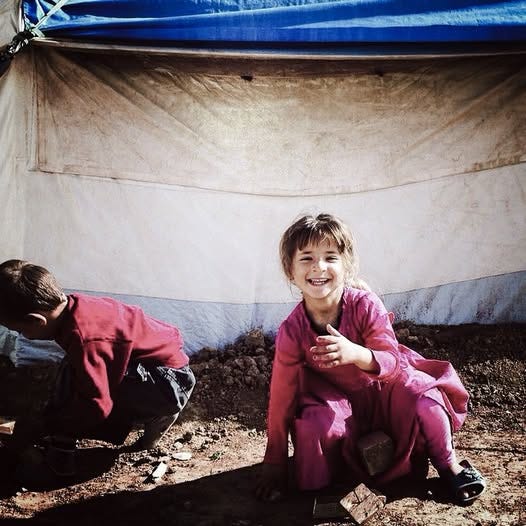
When we stop sending reporters into the world, we lose the world. We lose the nuance that comes from looking a person in the eye instead of quoting a press release. We lose the accountability that comes from standing where the bombs fell instead of where officials say they fell. We lose the stories that would otherwise never be told, because no algorithm will find them.
So, how do we bridge this divide between a rapidly mechanizing industry and a rapidly vanishing commitment to real reporting?
First, we must reinvest in on-the-ground journalism as a public good — something as vital to a functioning society as education or healthcare. Newsrooms can explore collaborative travel pools, nonprofit partnerships, and grants that support field reporting rather than hollowing it out.
Second, we must reaffirm that the human experience is irreplaceable. That the depth of emotion in a survivor’s story comes not from a template but from the fragile collision of two real lives, the teller and the listener.
I keep writing because writing is how I process the things I’ve seen, the grief I’ve absorbed, the reminders of humanity I’ve been lucky enough to witness. It is my catharsis, my calling, my way of ensuring that the people who trusted me with their stories don’t vanish into silence.
AI may become a powerful tool. It may sharpen our abilities, streamline our work, or help us analyze the world faster. However, it can never replace the thing that makes writing sacred: the human heart behind it.
At the end of every story, after the notebook closes and the dust settles, what endures is the bond between two people — one who lived the story, and one who promised to carry it.
That is something no machine will ever replicate.
THANK YOU FOR YOUR SUPPORT. PLEASE CONSIDER A PAID SUBSCRIPTION FOR MORE IN-DEPTH CONTENT CANVASSING THE WORLD.
Couldn't agree more. Thank you for this incredibly powerful piece, it articulates so well why the human element in sharing stories is absolutly essential. It's a crucial reminder that true understanding and dignity can only be built through genuine presence, not some algorithm trying to simulate empathy from afar.
Thank you for showing up.