

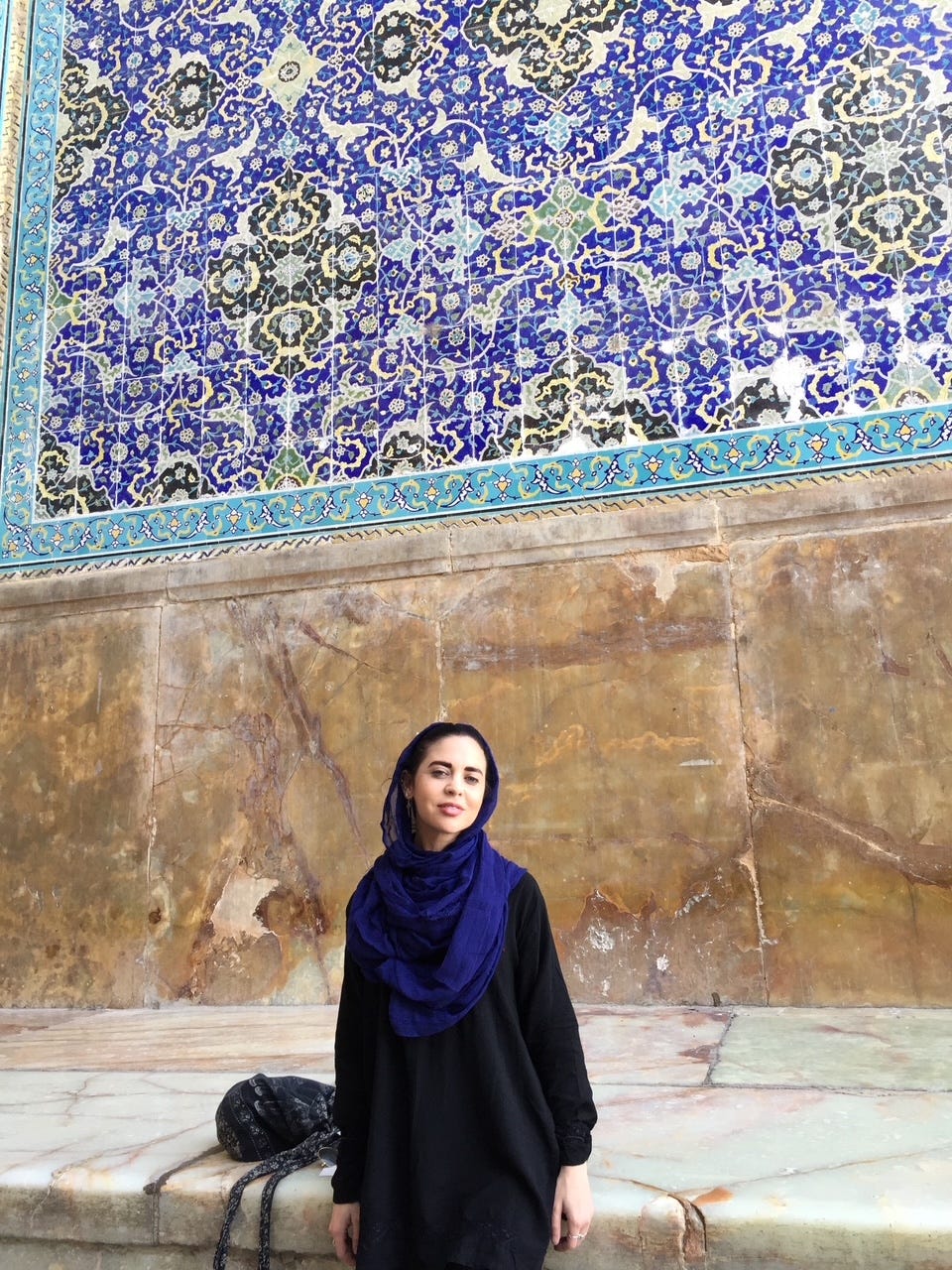
Some of the most harrowing accounts of human rights abuses I have ever recorded came from Iran, a place I visited alone several years ago.
I have spoken with women who were lashed and beaten to the bone for showing their hair, arrested for dancing in their own homes, and jailed for posting videos of themselves singing. I have interviewed men who described watching their sisters being thrown from buildings after being accused of “moral corruption.” I have documented the systematic use of rape as an instrument of state punishment, including the brutal rape and genital mutilation of female political prisoners the night before their execution, based on the theocratic belief that virgins cannot be put to death. Read that sentence again. Let it sit.
Yet, mass human rights abuses typically isn’t a justification for war. With that in mind, we heard last year that the regime’s nuclear capabilities, widely used as a reason to enter the war theater, were obliterated. Now we hear that a breakout was imminent. What is it? It’s one thing for politicians in gilded offices to champion war. It is another to send their sons and daughters to fight.
The Islamic Republic of Iran is a government that frequently oversteps its bounds. It is a regime built on the machinery of cruelty, one that exports terrorism across the region through the IRGC and its proxy networks, that has tried to assassinate American officials on American soil, that has armed factions responsible for the deaths of U.S. troops in Iraq.
The mullahs who run Tehran have made clear, repeatedly, that the destruction of Israel and the subjugation of the broader Middle East are not fringe goals but foundational ones. So, is now the time? Don’t get me wrong. I want to see this regime gone. I have wanted that for a long time.
And yet.
I walked down a street in Washington, D.C., recently, my current home base, the capital of the free world, and I counted the homeless encampments under an overpass. I thought about the woman I’d read about that morning who had crowdfunded her chemotherapy because her insurance denied coverage. I thought about the families rationing insulin. I thought about the parents working two jobs who still can’t keep up with grocery bills that have climbed 25 percent in three years.
The United States spends around $1 billion a day on Iran attacks, with no clear end in sight. Say this lasts 50 days. Let me tell you what $50 billion looks like in domestic terms. It is roughly the entire annual federal budget for Head Start, nutrition assistance for women and children, and low-income housing assistance combined. It is enough to wipe out medical debt for millions of Americans. It is more than double what the federal government spends on mental health and substance abuse services each year.
This is not an argument against confronting evil. I have spent too long watching what happens when evil goes unconfronted to make that case. But it is a demand for honesty about what we are choosing, and why, and for whom.
The last time we really had this conversation was in the lead-up to Iraq. We were told there were weapons of mass destruction. We were told the mission would be quick, clean, and transformative. We were told we would be greeted as liberators. None of that was true. What followed was a twenty-year entanglement that cost more than $2 trillion, the lives of nearly 4,500 American service members, and the destabilization of an entire region in ways that arguably made Iran more powerful, not less.
I am not drawing a straight line from Iraq to what may come with Iran. The situations are different. The Iranian regime’s nuclear ambitions, its regional terror infrastructure, and its direct attacks on allied nations are not manufactured pretexts. They are documented, ongoing, and serious. However, the administration’s messaging has been muddled at best. One day, the goal is to degrade nuclear capability. The next step is regime change. The day after that, it is deterrence. When the stated rationale shifts this frequently, it is fair and necessary to ask who is setting the agenda and what success actually looks like.
What does the day after look like? Who governs? What fills the vacuum? These are not defeatist questions. They are the only questions that matter, and the absence of clear answers is what separates strategy from improvisation.
The Iranian people, the ones who have flooded the streets in protest, who have risked everything to cut off their hair and burn their hijabs, who have chanted “Woman, Life, Freedom” in the face of live ammunition, deserve better than the regime that has terrorized them for more than four decades. I believe that fully. I have met some of those people. I have heard their stories. They are exeptionally brave.
But so do Americans deserve better. The single mother in Cleveland who can’t afford her child’s asthma medication deserves better. The veteran sleeping on a grate three blocks from the Capitol deserves better. The schoolkid in a crumbling building in rural Mississippi deserves better.
Tupac Shakur, of all people, put it plainly thirty years ago: we’ve got money for wars, but can’t feed the poor. It was cynical then. It feels like a long-running governing philosophy now.
I am not a pacifist. Years of back-to-back-to-back war reporting cured me of any romantic notions about what peace at any price actually costs. I know that sometimes the most devastating thing a democracy can do is nothing. Yet, I also know what war costs; not in press release numbers, but in bodies I have stood next to, in villages I have walked through months after the bombs fell, in the faces of people who were told their suffering would be worth it.
The question before this country is not whether the Iranian regime is monstrous. It is. The question is whether we are entering this with clear eyes, honest accounting, and a plan that extends beyond the first strike because the Iranian people have already paid for their government’s sins with their lives and their freedom. The least we owe them, and ourselves, is the truth about what comes next.
At this point, do we go all the way in obliterating the regime? Do we decide enough is enough and walk away? What is in the best interests of all involved? Is the long-term goal worth the inflation and death and destruction that war always brings?
“What does America First actually mean?” is not a rhetorical question. Is it suffering blows in the hopes of better longtime outcome? Is it putting others before ourselves, as we are taught in kindergarden? Is it more metaphorical than it is literal? I don’t have all the answers. But we need honest reflection. Remember, it took twenty years and many lives lost and maimed to replace the Taliban with the Taliban.
Are we willing to play that roulette again?
I’ve been delighted to get to know you through SmartherNews interviews also.
Your words are thoughtful, concise, and incredibly thought provoking. Thank you for this!