

Afghanistan
On a cold morning in the dawn months after the U.S.-backed government fell to Taliban rule, I venture into the mottled, rundown walls of Kabul’s Indira Gandhi Children’s Hospital. Three male doctors with greying hair and sad eyes shuffle in and out, unable to keep up with the unbearable load.
Wrapped in thin blankets, Nafisa struggles to open her fluttering eyes. Although she is only five months old, she carries the air of an old woman—her pink skin split and stretched around her gaunt frame, deprived of the fullness that should chart every little baby’s cheeks.
A doctor named Ahmadullah examines her chart and pulls his shoulders back, putting on a brave face in a job that should be filled with light.
“Nafisa has swelling, edema, her stomach is upset, and her muscles are wasting,” he tells me sluggishly. “She is five months old, but she looks a year old. Children with malnutrition age very fast.”
A young mother, shy and almost wasted to the weight of a child herself, looks on with a kind of numb exhaustion.
“She has lost her appetite. She lacks blood,” the mother tells me flatly from beside her small cradle. “It has been six days here.”
Baby Nafisa is hardly alone in her fight for survival. Three wards of the state-run facility overflow with the desperately ill and the needy.
“There is no medicine. There is no food,” laments Dr. Ahmadullah continues. “We have 360 beds, but we have more than 500 patients daily. And if we do not have the right medicine, a child will die.”
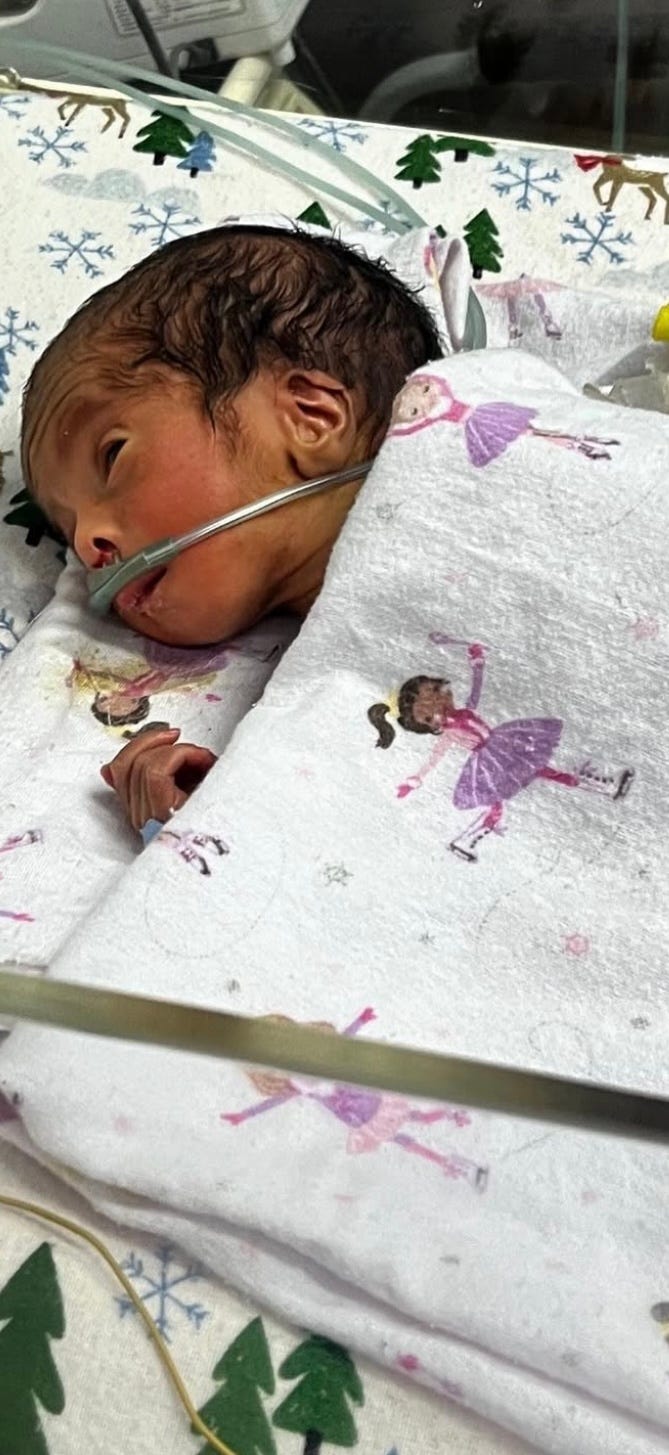
Due to the lack of room, two or three infants share a single cot or incubator bed, crammed into the small space side-by-side. Bleary, helpless mothers stoically breastfeed on the floor. The overstuffed wards are strangely quiet as a handful of medical staff with leathered faces and tired eyes float like ghosts from one ward to the next.
There is perhaps no worse feeling in the world than standing helplessly in a Children’s Hospital, staring into the empty eyes of the young and desperate, hamstrung to help the young and the innocent. Kabul’s state-run Indira Gandhi Hospital is just one of many medical facilities scattered across the historically war-torn nation, where too many babies take their last breath, and too many mothers are left to weep in silent corners, lost in the cracks of a country beleaguered by wars and poverty.
As external funding dwindles and the humanitarian crisis worsens, the children bear the most tremendous burden. This tribulation is never isolated. The mother suffers, too. Few mothers in the world can gaze at their writhing children through a frosted glass window without fighting to breathe themselves. I do not believe there is such a thing as imagined pain. All pain is real.
“There aren’t as many patients now with bullet wounds and war injuries,” Dr. Noorulhaq Yousufzai, Associate Professor of Pediatrics, who has worked at the Indira Gandhi Children’s Hospital for almost three decades, continues. “But the number of respiratory infections and pneumonia are becoming very high, as well as viral diseases like measles, mumps and meningitis. We have no money, no medicine.”
As I wander through the wards with peeling walls and teary faces, I see a seemingly endless stream of frail bodies carrying twig-like, purplish limbs and wisps of yellow hair poking out from tiny, balding scalps. Many of the mothers come from war and wide, from tiny, distant villages of mud huts and roads of dust. Many are young, wide-eyed, whispering as to whether I am a girl or boy as I talk to male colleagues and doctors with a freedom that can be confusing.
But many mothers are also much older than they appear. It’s not always easy to discern age in Afghanistan, as many Afghans themselves are uncertain of their exact birthdates. Afghans often don’t know their precise age. Time is not measured by the number of birthdays passed but by the harsh, unforgiving winters they’ve survived. It isn’t an easy life, scouring to survive in the open plains, exposed to the roughness and stress of life with little say. Family planning is a foreign concept, especially outside the main cities. One cannot even buy a tampon (there is a belief they can rid a girl of her virginity), let alone any method of birth control.
Another tiny infant, Mariam, so small she could probably curl into the palm of my already tiny hand, with pearl-colored tubes extending from her nose lays open-eyed and motionless. Blonde wisps, a sign of a drastic dearth in nutrition that zaps the pigmentation of the hair, falls over her rumpled lashes as she fights to open expressionless eyes.
“The situation is not good,” another physician, Dr. Humayoon, tells me softly, examining the chart of five-day-old Miriam. “She cannot receive oxygen normally. Her brain has not received enough oxygen, and she cannot take the milk.”
The fervent reality is that scores of infants – and their impoverished mothers – suffer from severe undernourishment in Afghanistan. The situation is only worsening as the impeding autumn cold settles in and the economic crisis deepens.
“The mother didn’t have good health and lacks the necessary vitamins,” Dr. Humayoon explains of another dramatically small newborn fighting for his life. “This is due to low income, difficulty obtaining food, and various physical and mental health conditions.”
I pause. Didn’t? The infant’s mother, he says hurriedly, did not make it through the emergency C-section.
Afghanistan has historically faced one of the highest maternal mortality rates globally. In 2000, the maternal mortality ratio was approximately 1,450 deaths per 100,000 live births. This figure decreased to around 638 deaths per 100,000 live births by 2017, reflecting healthcare infrastructure and services improvements. Yet more recent challenges, including political instability and restrictions on female healthcare workers, threaten to reverse these gains.
The torture that is famine is carved into the face of a child in ways words can never convey. Their vacant eyes, drawn cheeks, and brittle frame tell a silent story of suffering that no mother should ever have to witness. There is nothing quite as haunting as the image of a child’s body battling to survive, their innocence stripped by hunger and neglect. It is the echo of a world turning its back on the most defenseless, beginning with the mothers, the bearers of life.
FOR EXCLUSIVE GLOBAL CONTENT AND DIRECT MESSAGING, PLEASE CONSIDER A PAID SUBSCRIPTION TO THIS SUBSTACK TO HELP KEEP INDEPENDENT, AGENDA-FREE WRITING AND JOURNALISM ALIVE. THANK YOU SO MUCH FOR YOUR SUPPORT.
For speaking queries please contact meta@metaspeakers.org
For ghostwriting, personalized mentoring or other writing/work-related queries please contact hollie@holliemckay.com
Follow me on Instagram and Twitter for more updates
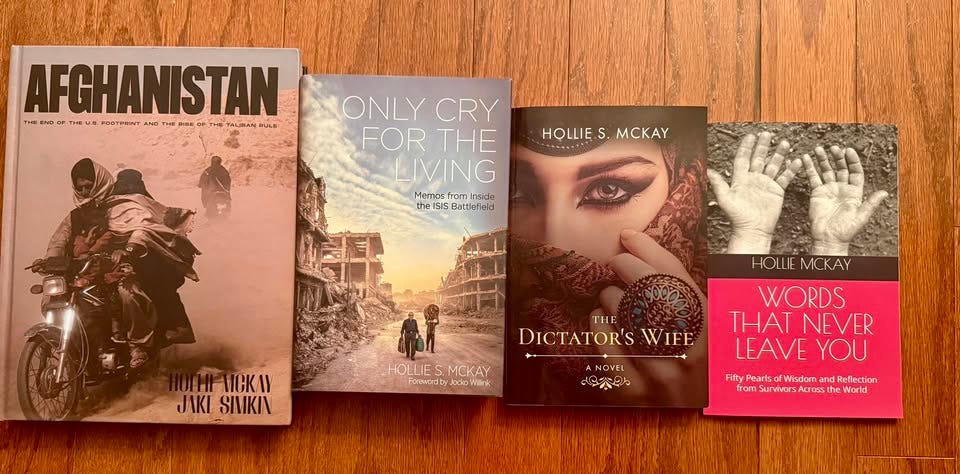
Click to Purchase All Books Here