

Many of my earliest childhood memories are wrapped in the solitude of writing.
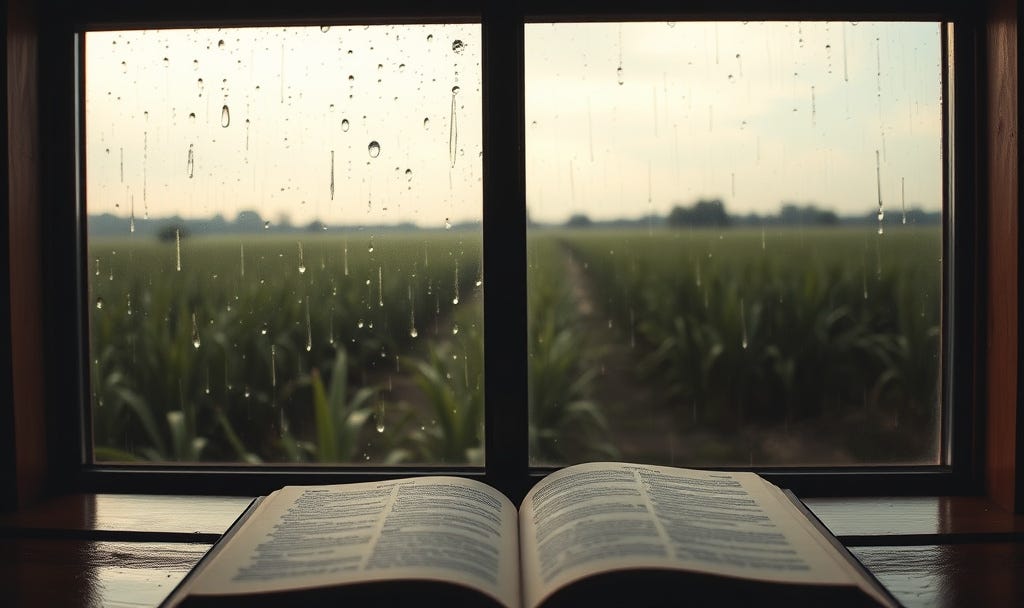
I tangle myself in a knot of thin blankets, always with a book, until the light falls behind the nearby Pyramid peak, a giant granite core worn down to a pointed hill, in my grandfather’s towering home in the desolate tropics of far North Queensland, Australia. Through the half-opened window, heavy, oily rain begins to pound and thunder cracks, carrying that sweet aroma like a sugary fairy cake. I feel as though I am teetering on the edge of the earth, lost in the green fields of cane and orchids stooping against the rabid winds, so far removed from children my age, from anything resembling civilization.
I fall asleep to the familiar, mammalian soundtrack: the evocative call of curlews, dingoes whining at the moon. I am drawn to darkness, to fantasy existences so far from my own. I am scared of Mother Nature in her ferocious night, feeling so small beneath that vast and indifferent sky, but unafraid to stay scared, to hold the fear in the pit of my stomach and count down the minutes until a streak of golden pink bleeds through the hills once again.
I reach for my notebook and write, scrawling beneath the hint of light from the crescent moon. My very earliest memory of putting creative words to paper was a stick-figure book, made around age three, in which I run away with the lions and join the circus. I live in a vibrant tent, the color of shallow sea, and move from place to place every few days.
Now, in the drum of North Queensland summer rain, around seven years old, I pick up where I left off several years earlier, the pencil drooping between my fingers as I finally fall asleep. That catharsis, all these decades on, has saved me more times than I can count.
***
There has always been something in the act of putting pen to paper: a release, a reckoning, a place to put the things that don’t fit anywhere else.
I say this because I know there are a lot of people out there who love to write, yet talk themselves out of it. They’re afraid it won’t be good enough. They can’t find the time. They don’t have a platform. I’m here to say: none of that is the point. Writing is a gift for everybody, not just those with bylines, follower counts, or something impressive to put in a bio.
I would make a terrible social media influencer, for what it’s worth. I feel silly talking to my phone in selfie mode. That is just me. However, give me a blank page and something that matters, at least to me, and I’m there. Each time I share something I am not sure I should, I gain more confidence. Writing is a shared connection as old as time. Authentic thought is increasing rare. Let’s not let it fall to the wayside in an AI-lathered world.
So here, in that spirit, are five writing tips that I live by.
1. Write the thing that makes you most uncomfortable.
The experiences that rattle your bones, the ones that made you who you are, those are the ones worth going into. They’re the scary ones. They’re also the ones that need to be told. Write from the heart, from your life, from the parts of yourself you’d rather keep quiet. That discomfort usually points you in the right direction. Authenticity is what separates the good writing from the great.
2. Don’t outsource your voice to AI.
I’m not anti-AI. It’s a tool, and a useful one, for fact-checking, grammar, getting unstuck, and streamlining the unglamorous parts of the process. But what I see now is complete oversaturation of same same AI-generated content, right down to Linkedin post or WhatsApp message, and people seem to think you can’t tell the difference. You can tell. Something is missing when writing hasn’t come from a human being who has actually lived something. AI doesn’t have your years, your failures, your specific grief, your particular way of seeing. Use it to improve your writing, offer suggestions, trim away the excess and repetition. Don’t use it to replace you. The ChatGPT-esque caption is routinely bland and follows a pattern of “sentence perfection.” Captivating writing, on the other hand, is fabulous imperfect. AI has no true lived experience to draw on. Only you do.
3. Details matter more than you think.
When I interview someone in a conflict zone, I ask questions that seem strange at first. What was the weather like that day? What time did it happen? Do you remember what your daughter was wearing? People look at me sideways. Those details, however, are what make a story live, fiction or non-fiction, it doesn’t matter.
Before you begin writing anything, take a pen and paper and brainstorm the sensory specifics of what you’re trying to capture. The muted gray sky. The clarity of the water. The sound of a child squeeling down the beach. The feel of buttery soft sand between your toes. That red and blue striped swimsuit faded from summer after summer. The footprints by the water’s edge, and the constant wondering of who they belong to. These seemingly minute things have a purpose. They are what move a reader forward and make them believe you.
4. You don’t need to be famous, infamous or well-known. You just need to be you.
There is something I call “extraordinarily ordinary,” the idea that every life, every perspective, every specific human experience has an audience. You don’t need a massive platform to share your writing. You don’t need credentials, clout, a big publishing deal, or anyone’s permission. What matters is that your voice is yours, and no one else has it. Once you’ve put something out into the world, the hardest and most important thing is to walk away from the need for validation. Your voice matters as much as anyone else’s, regardless of followers, platform, or notoriety.
5. Read. Then read more.
I don’t think it’s possible to be a good writer without being a serious reader. I highlight passages that make my bones tingle; a description, a turn of phrase, a way of seeing something I’ve never considered. I keep those. When inspiration runs dry, I go back to them. Reading great writing is the only way to train yourself to produce it. There is no shortcut here. Indulge in it as much as you can.
If any of this resonates and you’re looking to explore your own writing or creative voice a little further, I’m taking on a small number of people for writing coaching. If interested, reach out to hollie@holliemckay.com